Neurophysiology is the scientific study of the functional properties of the nervous system, encompassing cellular, molecular, and systemic mechanisms that underpin neuronal signaling and information processing. It integrates principles of electrophysiology, biophysics, neurochemistry, and systems biology to explain how neural circuits generate behavior, control homeostasis, and respond to environmental stimuli.
At the cellular level, neurophysiology focuses on the electrochemical dynamics of neurons and glia, particularly ion channel function, membrane potentials, and synaptic transmission. Key processes include the generation and propagation of action potentials, excitatory and inhibitory postsynaptic potentials, and neurotransmitter release and receptor activation. These phenomena are crucial in determining neuronal excitability and network behavior.
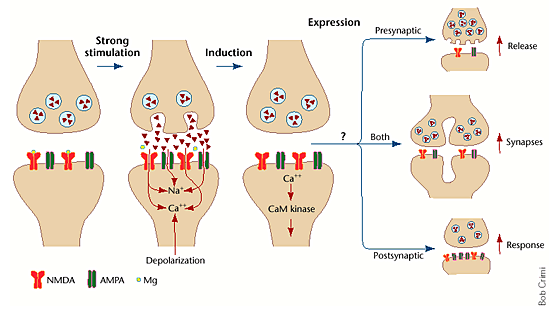
At the systems level, neurophysiology explores sensory and motor integration, autonomic regulation, cortical processing, rhythmic activity (e.g., circadian rhythms, oscillations), and plasticity mechanisms such as long-term potentiation (LTP) and long-term depression (LTD), which form the basis of learning and memory.
Furthermore, the discipline is central to understanding the pathophysiology of neurological diseases. Aberrant neurophysiological processes underlie disorders such as epilepsy (hyperexcitability and hypersynchrony), Parkinson’s disease (dopaminergic system dysfunction and altered basal ganglia circuitry), and neuropathic pain (abnormal peripheral and central sensitization).

RESTING POTENTIAL

ACTION POTENTIAL
:watermark(/images/watermark_5000_10percent.png,0,0,0):watermark(/images/logo_url.png,-10,-10,0):format(jpeg)/images/overview_image/4380/IZEhSJ2GrTZVmXEU8IAkcA_P19_action_potential_membrane_CSR_en.jpg)
SYNAPTIC TRANSIMITION REFLEX ARC Motor and Sensory Homunculus EEG WAVES